

Our services
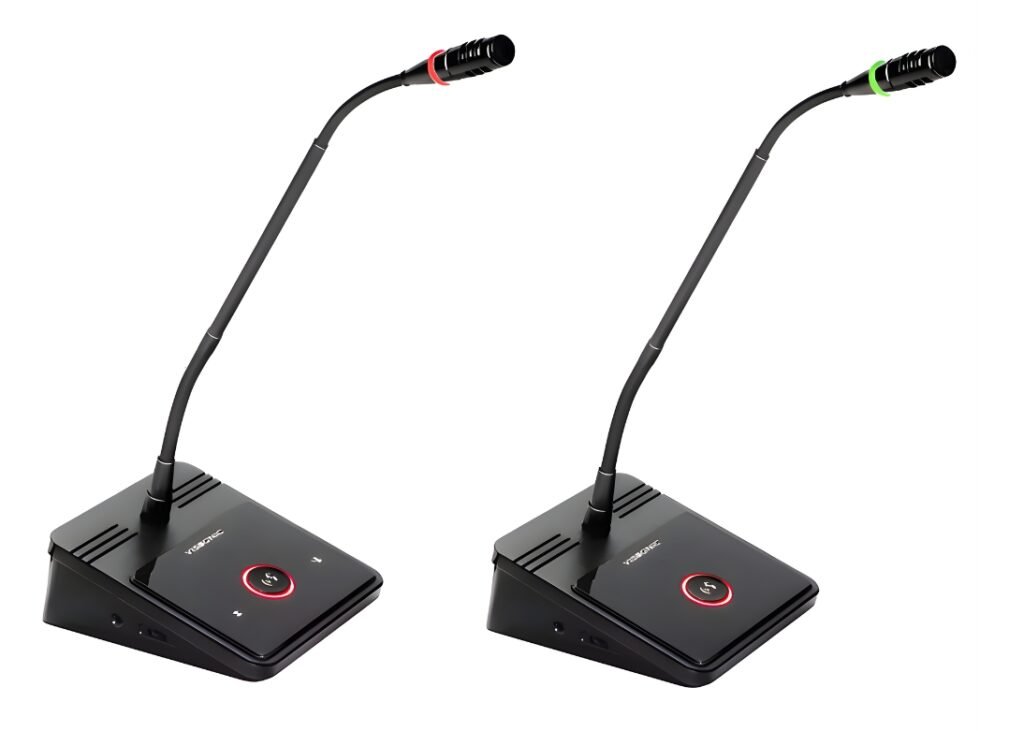
Cat-6 Digital Wired Microphones
Stable Wired Audio
Low Latency
Conference & Council Use
Cat-6 digital wired microphone systems (digital audio over Ethernet/Cat-6) combine the reliability of wired networks with modern digital audio processing. They are commonly chosen for boardrooms, council chambers, courtrooms and permanent conference installations that require robust, interference-free speech.
What is Cat-6 Digital Wired Microphone System?
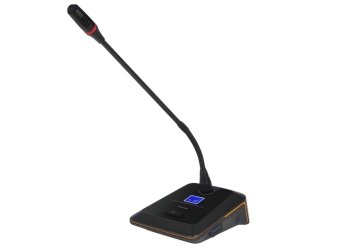
Cat-6 Digital Wired Microphone systems transport digital audio and control data over standard Cat-6 Ethernet cabling. Instead of legacy analog cabling or proprietary multi-wire looms, these systems use modern network cabling and digital audio codecs, delivering clean audio, predictable latency, centralized power and simplified installation.
Advantages include robust performance in RF noisy environments, easy expansion, central management, and predictable audio quality important for mission-critical meetings and permanent installs.
Key Features
Reliable Wired Transport
Uses Cat-6 cabling for deterministic signal delivery with significantly reduced RF interference risk compared to wireless solutions.
Digital Audio & Low Latency
Advanced audio codecs and DSP deliver low-latency speech, echo cancellation, gain control and optimized intelligibility for conferencing speech.
Centralized Power & Management
Power over Ethernet (PoE) or centralized power supplies simplify cabling; central control interfaces allow global mute, channel assignment, priority and meeting control.
Scalable & Modular
Systems can scale from a single small meeting room to large council chambers by adding additional networked delegate units, repeaters or PoE switches.
Integration & Recording
Often integrates with AV, recording, translation consoles and PA systems via digital I/O or Dante/AVB/AES67 gateway modules.
Applications
- Municipal councils, legislative assemblies and government chambers
- Boardrooms and corporate conference rooms
- Universities, courtrooms and institutional meeting rooms
- Hotels and large conference centers with permanent installs
- Hybrid meetings with integrated recording, streaming and interpretation
Typical System Architecture
A Cat-6 Digital system typically includes:
- Central control/processing unit (PoE switch or dedicated controller)
- Networked delegate microphone units (tabletop or gooseneck) with DSP
- Chairman/host units with priority & moderation controls
- PoE switches and structured cabling (Cat-6), patch panels and termination
- Optional Dante/AES67 gateways for AV integration and recording
Typical System Architecture
| Parameter | Typical Value / Note |
|---|---|
| Transport | Digital audio over Cat-6 (PoE preferred) / AV over IP options (Dante, AES67) |
| Microphone Type | Gooseneck condenser (delegate), boundary or tabletop |
| Sample Rate / Bit Depth | 48 kHz / 24-bit (typical for pro systems) |
| Latency | <20–50 ms (system dependent) |
| Power | PoE (802.3af/at) or centralized PSU |
| Channel control | Chairman priority, mute, voting and request-to-speak (model dependent) |
| Connectivity | Cat-6 structured cabling, optional Dante/AES67 output |
| Operating environment | Indoor, climate-controlled conference rooms |
Buying Guide What to consider
- Room design & seat layout: table topology, in-table versus on-table units.
- Number of delegates: plan for peak headcount + spares (10% spare recommended).
- Power & PoE planning: ensure PoE budget in switches or use dedicated injectors / PSUs.
- AV integration: will you need Dante/AES67 output for streaming/recording?
- Meeting features: voting, token speaking, priority/override, recording, interpretation routing.
- Maintenance & spares: spare capsules, cables, table plates and PSU redundancy.
- Local support & warranty: prefer vendors with on-site service and parts availability.
Installation & Best Practices
- Run Cat-6 structured cabling to each microphone position with proper labeling and patching to a PoE switch.
- Use managed PoE switches with per-port PoE budget monitoring to avoid power shortfalls.
- Perform pre-installation network tests (link speed, packet loss). Avoid mixing AV over IP traffic with heavy uncontrolled networks — use VLANs or dedicated AV network where possible.
- Calibrate microphone gains and apply DSP (EQ, AGC, gating) during commissioning for best speech clarity.
- Document cable runs, IP addressing (if used), firmware versions and provide quick user guides for operators.
Frequently Asked Questions
What are the advantages of Cat-6 wired microphones over wireless?
Cat-6 wired microphones eliminate RF interference, provide deterministic latency, centralized power (PoE), and are easier to manage in permanent installations compared to wireless systems.
Do Cat-6 microphone systems require special network switches?
Use managed PoE switches capable of handling required PoE budget and VLAN segmentation for AV traffic. Some systems require Gigabit ports and PoE+ (802.3at) depending on device power draw.
Can Cat-6 systems integrate with my streaming / recording setup?
Yes many modern systems include Dante/AES67 or provide analog/digital outputs via gateways so you can record or stream meetings with high fidelity.
How should I plan cable runs and spares?
Label and document all runs, leave service loops, use patch panels and keep 10% extra microphones and spare PoE injectors/power supplies on hand for quick replacement.
Is the system hygienic for shared use?
Yes. Ear-hook receivers are easy to clean and sanitize, making them suitable for shared usage across multiple tour groups and events.
Business & Technical Benefits
- Predictable performance: wired infrastructure avoids Wi-Fi congestion and RF interference.
- Lower support overhead: centralized management, diagnostics and PoE reduce field visits.
- Future-proofing: network-based audio allows integration with Dante/AES67 and AV networks.
- High speech intelligibility: integrated DSP (AGC, EQ, noise suppression, gating).
Ready to design your Cat-6 conference system?
Tell us room dimensions, delegate count, and integration needs we’ll propose a system, equipment list and a site-ready cabling plan.